November 2025 Newsletter
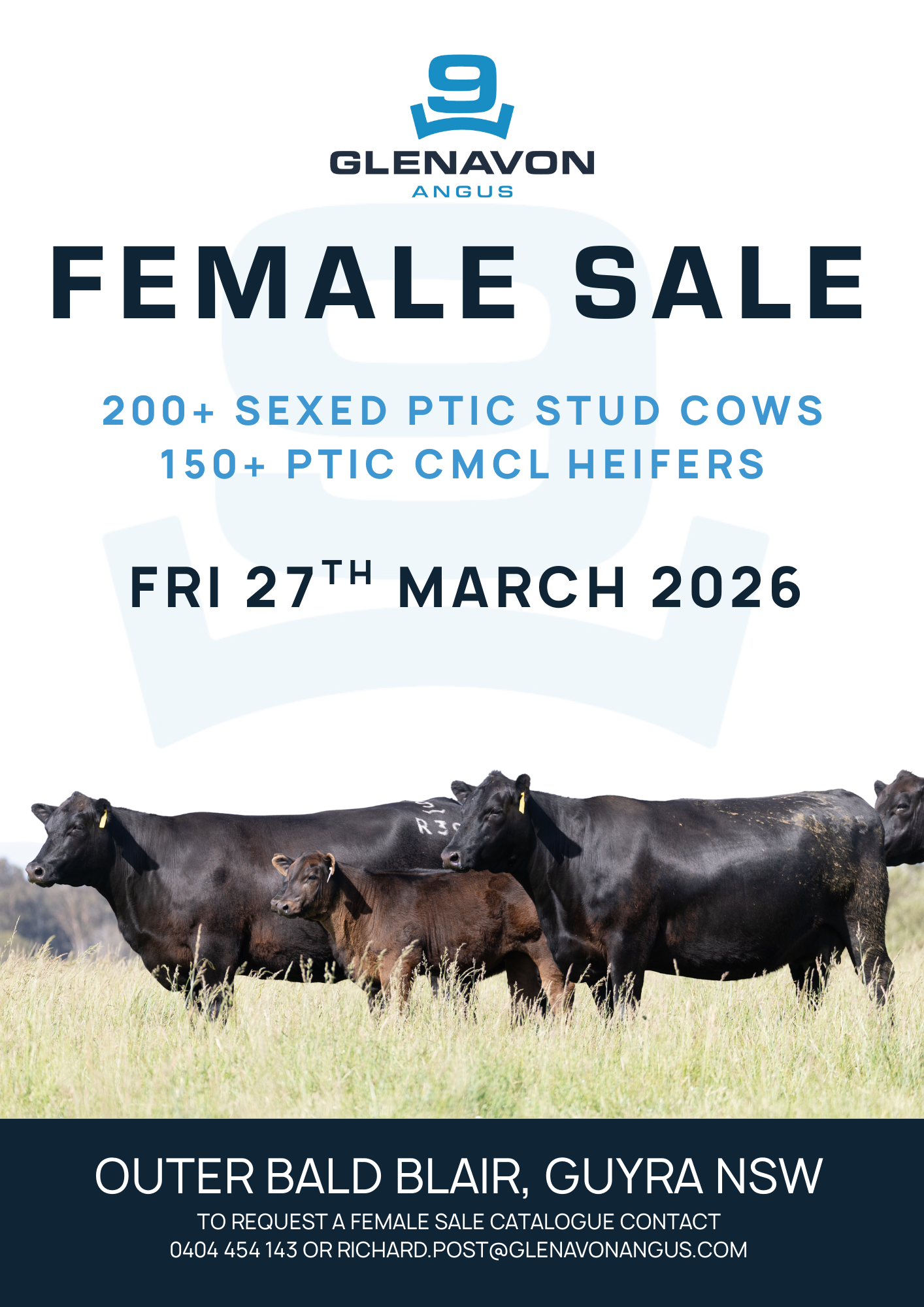
First Stud Female Offering in 70+ Years
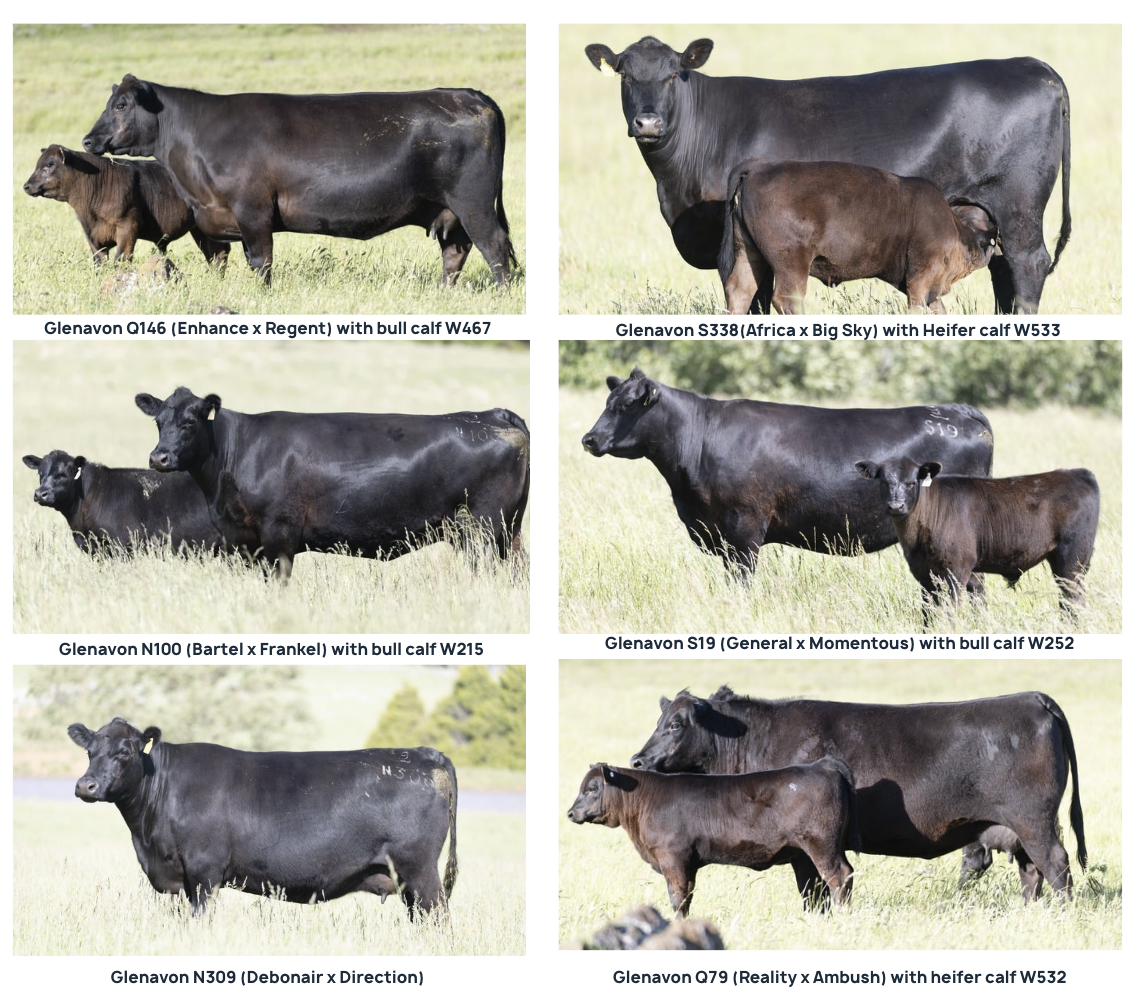
This offering is the outcome of strategic growth in our stud herd, complemented by larger scale embryo programs in recent years. As a result, we are able to offer you females from one of the deepest and longest performance recorded herds in the country.
We will offer 200+ sexed PTIC Stud females.
- Entire drop of R females (2020) and up including donors- 130 PTIC females
- A strong selection of younger S, T, U, (2021-2023 drop) PTIC females – 70+ PTIC females
- 150 PTIC commercial heifers
- One V PTIC Stud Heifer – all proceeds to the Angus Foundation.
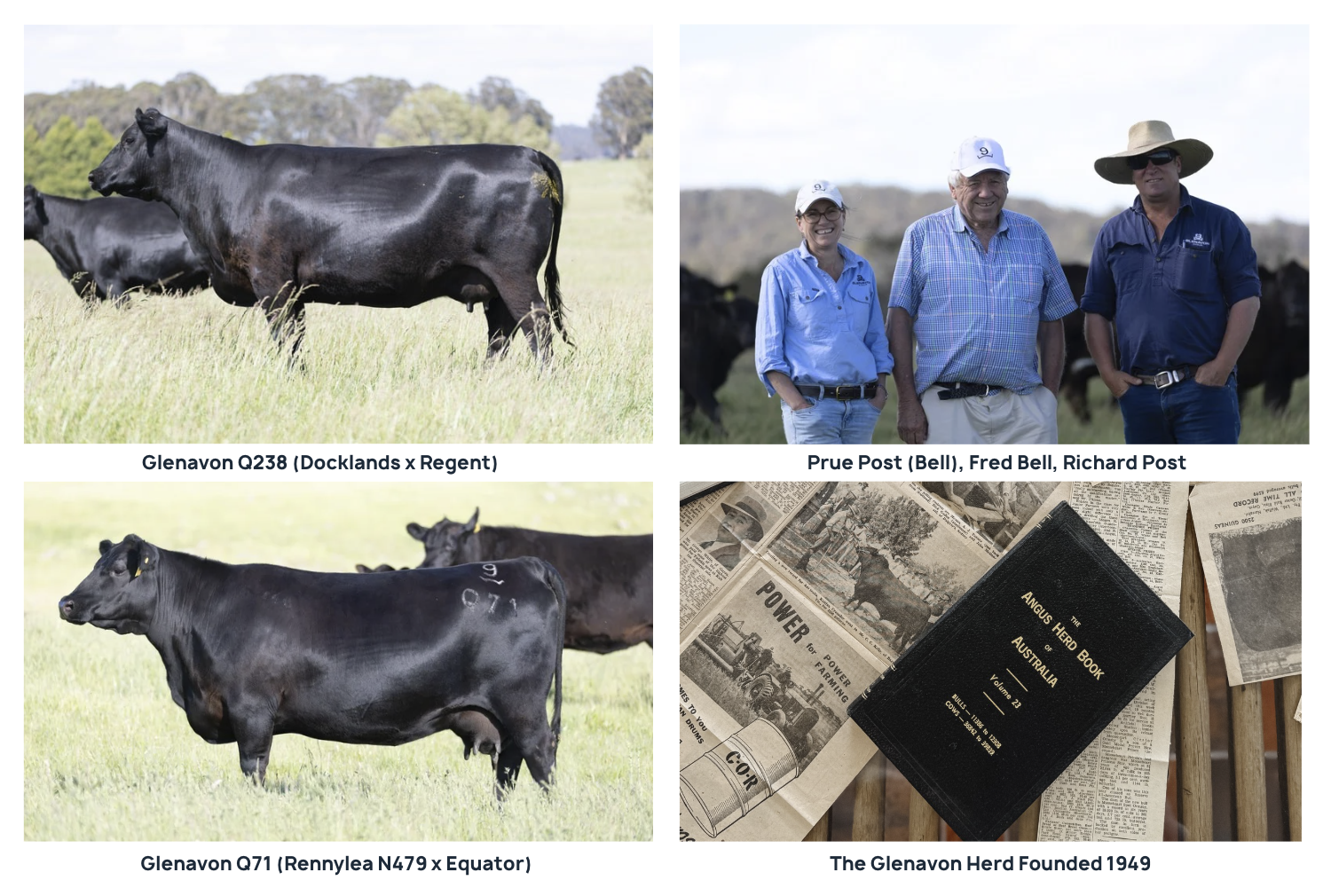
Our herd was founded on the maternal family lines in particular Evening Star, Delima, Gilda and Esma. These family lines have not only survived, but are thriving in our herd today, especially in recent decades under strong selection pressure and performance criteria.
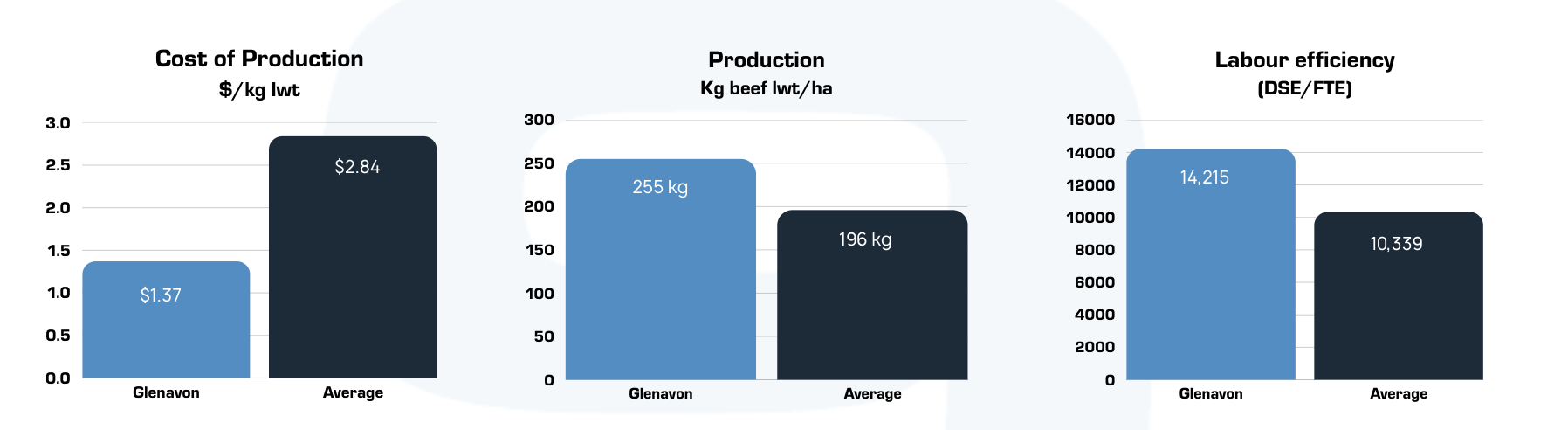
Both our seedstock and commercial herds are run under high stocking rate pressure, tight joinings, and annual structural assessment. The results of this are one of the lowest Cost of Production beef herds in Australia. In FY24-25 this was $1.37/kg vs the industry of around $3. The benefit of our years in benchmarking is the high conviction we have in our genetics to deliver high profitability to our clients.
In regards to genetic gain our female herd sits below the breed for birth, with short gestation, yet offers well above breed average growth, carcase weight, scrotal, and marbling. Stud pregnancies will be aged to cycle and sexed by Shane Thompson & team of Holbrook Vet Centre, which will be provided for each individual lot in the sale catalogue.
We plan for open days in mid March and again the afternoon prior to sale, followed by drinks and dinner. To request a female sale catalogue contact Richard on 0404 454 143 or richard.post@glenavonangus.com
Joining & Bull Longevity
Commercial Cows and calves have been joined for 6-7 weeks in mobs of 150-230 head, and heifers around 220 per mob. Older bulls are joined at 2-2.5% to start, Yearlings around 4%.
Regular monitoring is essential. We check mobs at least twice a week and identify dominant bulls early, which typically become obvious within 2–3 weeks as they lose condition from overworking. These bulls are removed after the first cycle (3–4 weeks, when 60% are pregnant) to prevent breakdown and allow them to recover, while maintaining the same bull ratios of what is LEFT TO BE SERVED for the remainder of joining.
This single change in our bull management has driven our bull breakdown rate from 25% to 6-7% in recent years, significantly extending the longevity of our bull team and lowering calf cost. We have great data which we are happy to discuss anytime.
Bulls typically recover quickly, putting on 2.5kg a day or more in the weeks following removal from a mob. Data this spring shows the 27 yearling bulls used on heifers lost on average 1/kg a day during their 46 day joining, vs the rest of their contemporary group (which were not used) continuing on their ADG path of 1.5kg+. All bulls are grown out on grass.
Stud Calving Cut-Off
We like pushing the envelope and collecting data — one example is cut off date or females to calve prior to the next AI (1st week in Oct). We aim to include as many females as possible in AI each year.
We allow cows at least eight weeks to recover from calving before joining to AI. A review of our calving data reinforced this: cows calving 10 weeks prior to AI achieved a conception rate of 63%, 9 weeks 57%, 8 weeks 51%, and 7 weeks dropped to 34%.
Stud Joining & Donors
A mild and dry Sept/Oct whilst not ideal for growing a lot of grass, was near perfect for our 3 AI and 2 ET programs. We do one large round of fixed time AI in late Sept/Early Oct before drafting females into mobs specifically matched to backup bulls selected for exceptional structure. The Angus Australia mating predictor is a heavily used tool in all joining decisions.
ET programs are run in a tight October period to ensure calves arrive on the same schedule as the stud calving window the following winter. Donor cows are selected for elite structure and exceptional performance, in particular progeny history. Therefore only mature cows are flushed, to a mix of MOET & IVF.
April/May 2026 will see our first Autumn ET program. Male sexed semen will be used to provide a drop of bull calves in Feb 2027 to supply 18mo bulls to our 2028 sale. Key outcross sires used in our Spring AI & ET include US Sire T/D Doc Ryan, Clunie Range Untouchable, Cluden Newry Uppercut, Landfall Signature & New Ground son Booroomooka T275.
Feedlot Performance
Our Feedlot data shows our own steers outperforming in the pen and the abattoir. Over the past 12mo, on average, our steers gained 2.3kg vs 2.1kg ADG for steers in the same system. We aim for an average marble score of between 3 & 4 , and over the past 12mo 79% fitted into this range. At a minimum, we want to be in the top quartile of both pen and carcase performance for those we supply to create value throughout the supply chain.
Our highest marbling steer (graded 6) was out of a Glenavon S Commercial Heifer sired by Glenavon Intensity S89 who has just completed another year of joining stud AI backup. 86% of our steers have met the threshold for high end branded Angus products (MSA grade + marbling).
Feedlot Trials
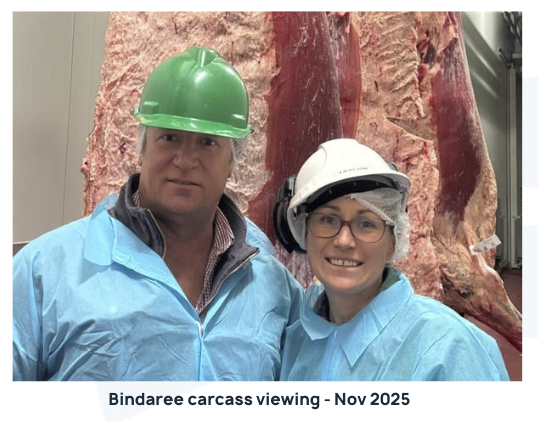
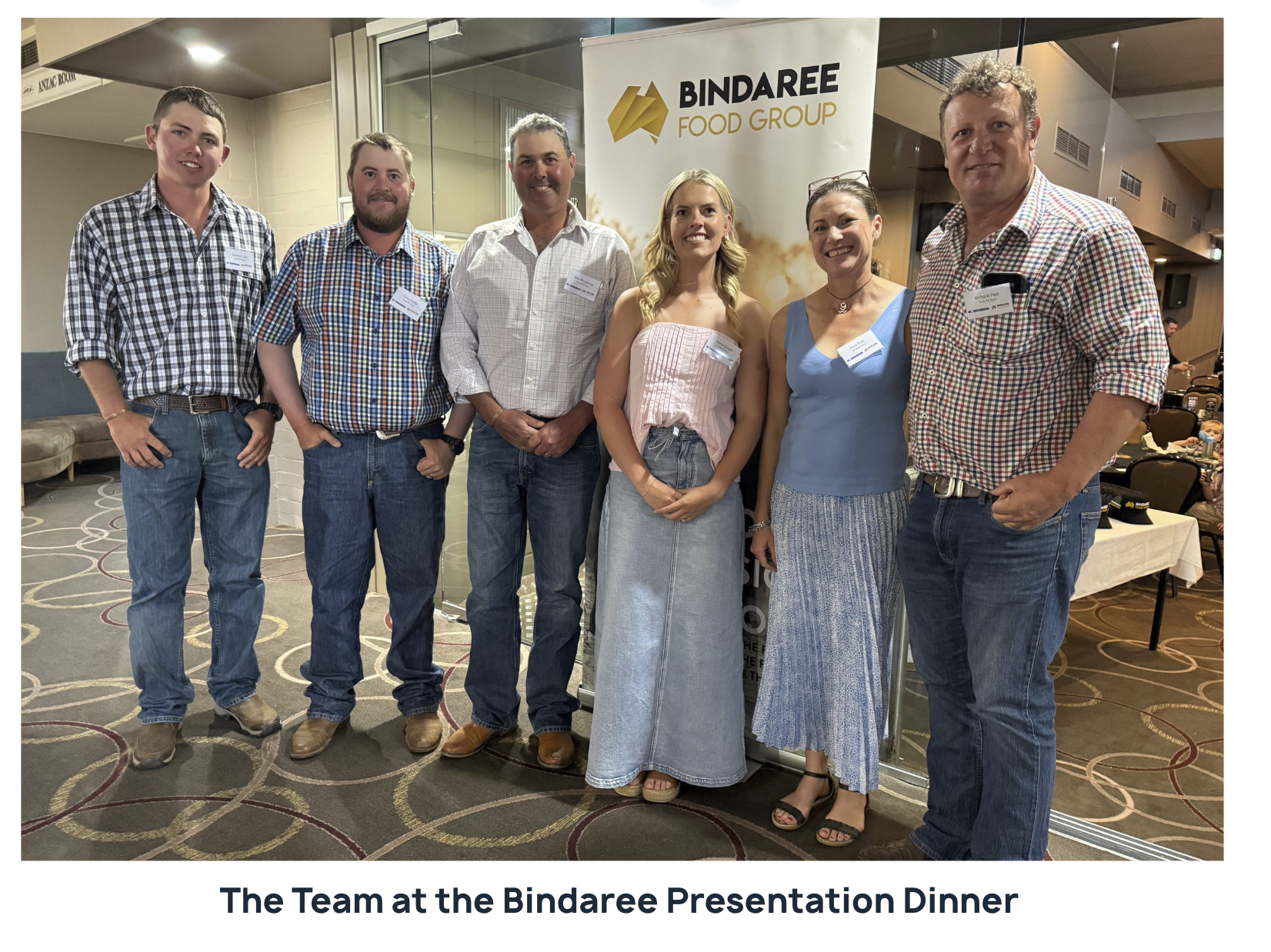
We participated in two further feedlot trials this spring, following our success in the Angus World expo trial in autumn. The local Inverell Feedlot Trial and Carcass Competition commenced in July, with our steers entering Myola Feedlot for 120 days. A highlight was carcass viewing in Nov at Bindaree, and the awards night with great people. I would encourage those in the New England to add this to their 2026 calendar. We had a great result with 2 teams placing in the top 6 overall team performance out of 26.
The Teys Beef Spectacular Feedback Trial commenced in August with the first hurdle met via an ave induction wt 390kg. We look forward to connecting with other participants on 30th January 2026 for the presentation evening which we are led to believe is one hell of a night!
Agrista Benchmarking
We recently completed our 2024–2025 Agrista benchmarking on each of our 4 enterprises – Seedstock cattle, Commercial Cattle (our largest enterprise), Beef Trading and our final year of Prime lamb due to an exit of this enterprise.
Over the past decade, whilst also expanding our land area, we have moved our mid-winter stocking rate from 8 to over 12 DSE/Ha. This has been driven by pasture renovation, infrastructure upgrades – in particular water and fencing, feed budgeting, moving to larger mobs in rotation and upskilling of our team.
Snapshot of our commercial beef herd numbers for 2024-25:
Pasture Renovation
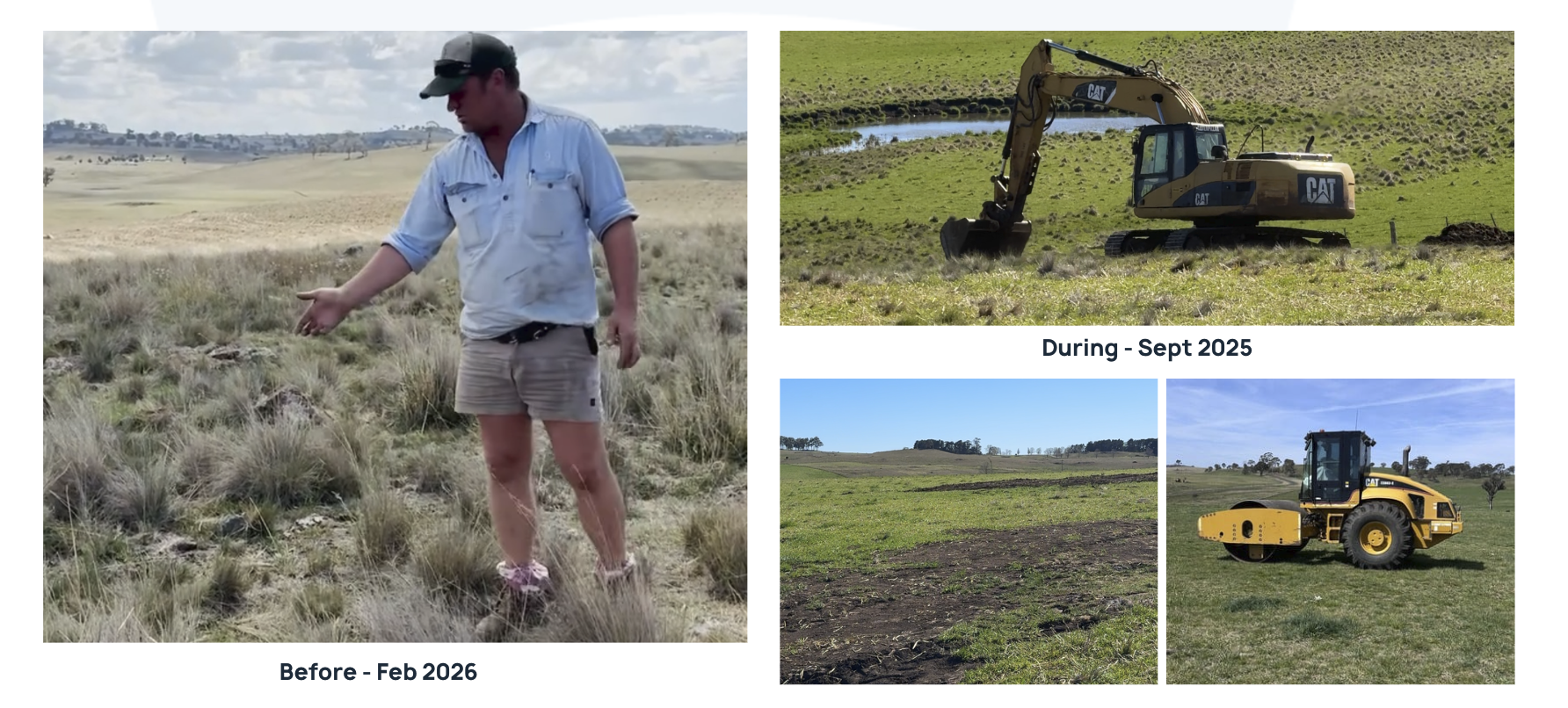
We continue to identify poor-performing paddocks, supported by our Optiweigh data which gives us clear animal performance on different paddocks. At our nearby property Tara, the paddock (pictured below) was sown dry in Feb with a oats, a 2 year ryegrass & brassica, which adds winter production in years 1 & 2 with the goal of sowing a permanent multispecies pasture in year 3.
The paddock itself was largely full of poor native species, and very rough, with significant rocky areas limiting how much area we could drag a drill over. To address this underutilisation, we bring in an excavator and roller to remove, bury and roll in rocks in order to sow 99% of the paddock in coming years. This activity will transform the paddock’s productivity, rather than dragging upon, our goal of generating 250kg/ha beef annually.
Fertiliser
“Is fertiliser the first dollar or the last dollar you spend in your budget?”
It’s a question we ask ourselves regularly. In short we believe it to be the highest impact dollar we spend.
Synthetic fertiliser is generally spread at the beginning of spring. Mawarra, with its strong fertiliser history and maintenance requirement, received single super at 147 kg/ha in Sept.
Tara, Karangi, Carawatha and OBB, which had not been fertilised for a couple of years, were treated with Triple S at 160 kg/ha, applied via both ground and plane for efficiency. Good rain in November (125mm) has been the icing on the cake and leaves us growing at in excess of 50kg DM/ha/day, a stark contrast to the month prior which saw pasture growth plummet in the last weeks of October to effectively zero.
Calf Marking
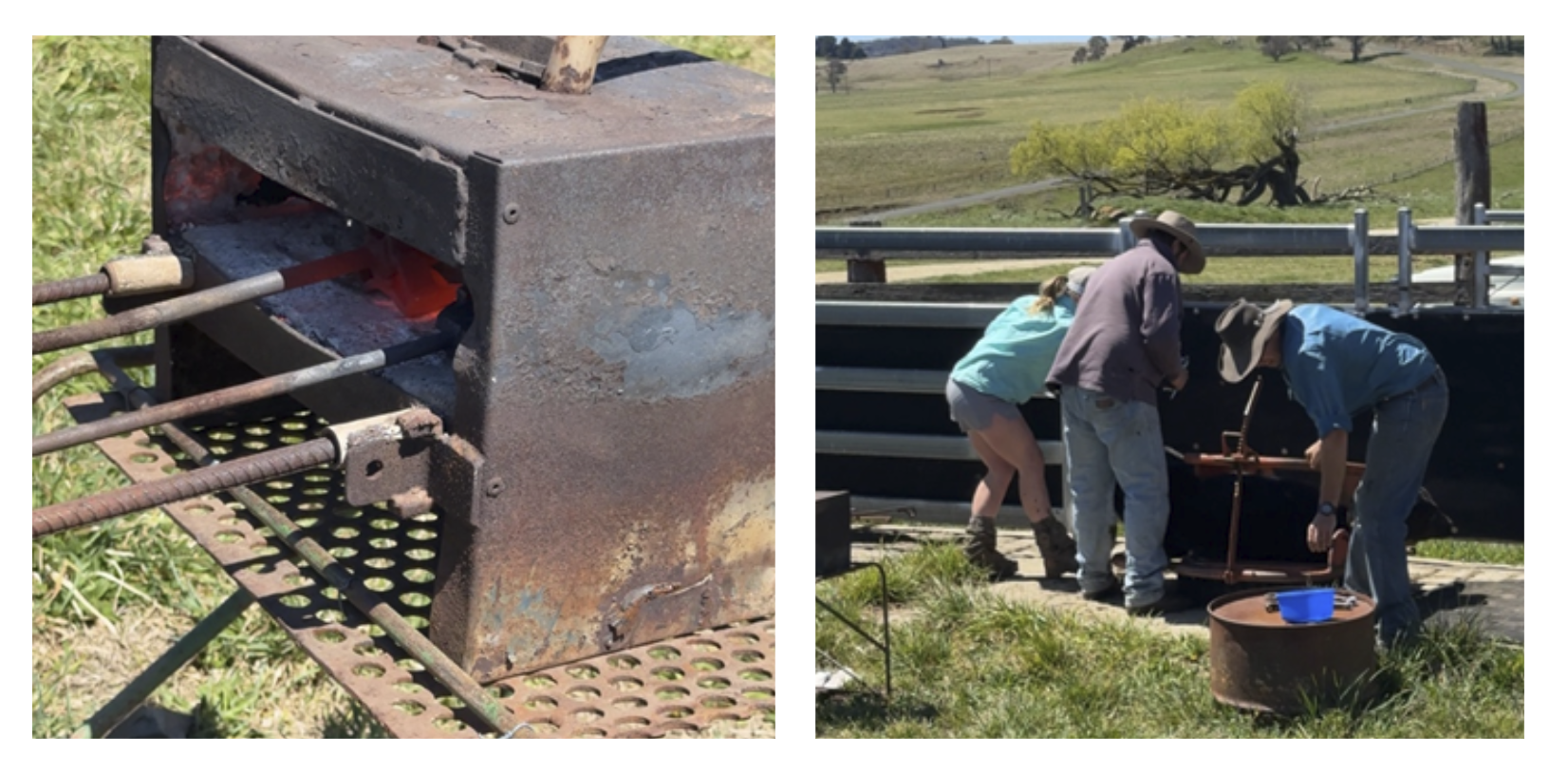
In excess of 800 calves were marked across 3 different properties in September, which has to fit in around our Stud AI & ET Programs. The benefit of a tight joining in Oct & Nov means all calves are born in July & August, allowing for one marking round in mid Sept. All calves are branded, vaccinated and given an NLIS button so we can track performance by sire groups. At marking we “mob up” into mobs of 150+ cows and calves ready for the teams of bulls to go out again the 1st week of October. Our highly skilled team paired with good infrastructure (yards) drives a lot of our labour efficiency.
2025 Bull Sale
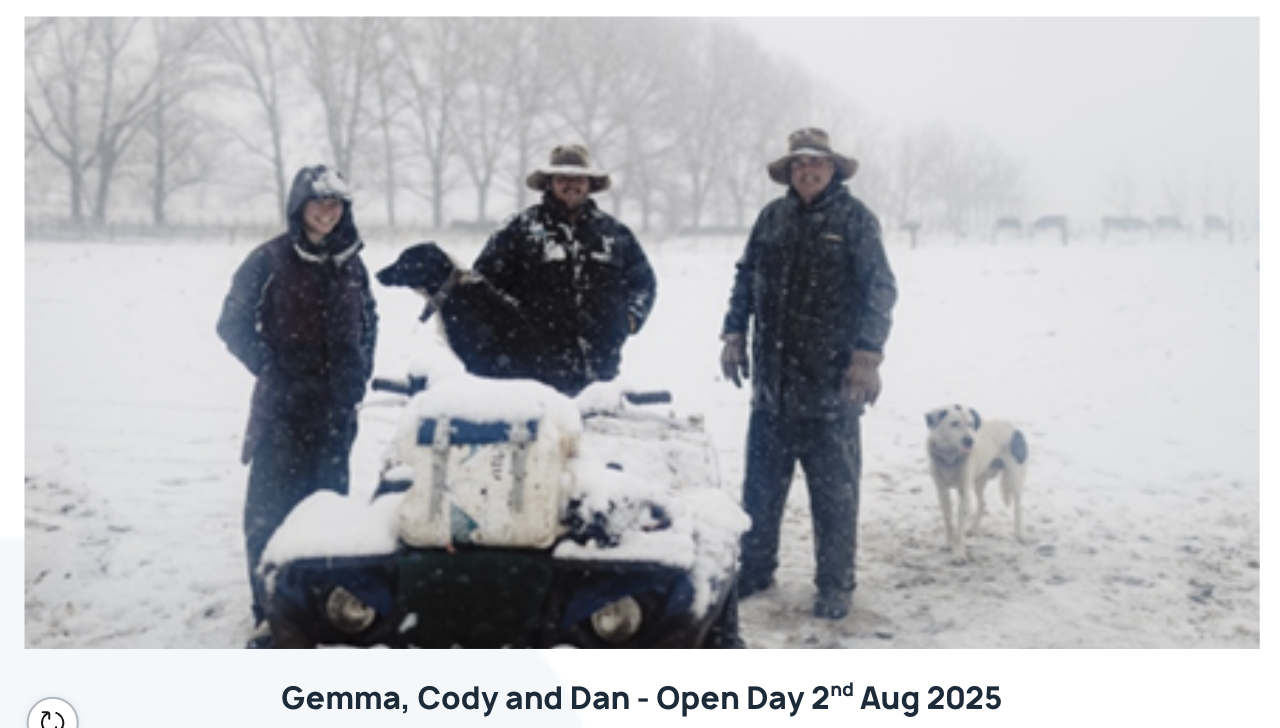
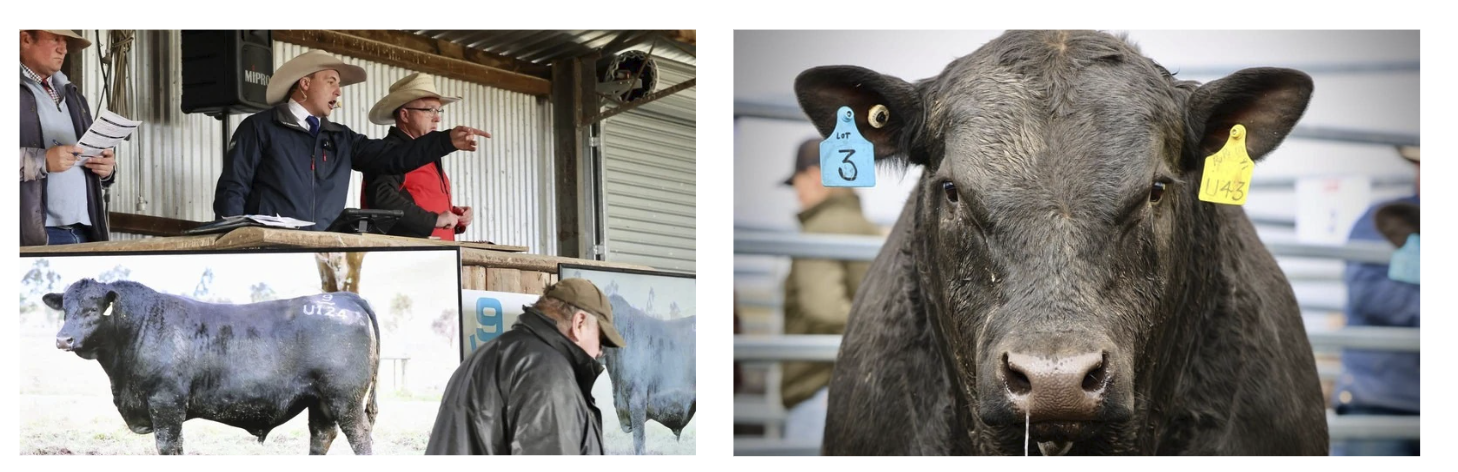
A record breaking snow event on our open day just prior to sale resulted in a few changes to our open day as we were unable to get the bulls to the yards! Fortunately the highways reopened by Monday & our 2025 Sale was a great success, with 123 bulls sold to a top of $46,000 (Lot 24, purchased by James Harris) and an average of $11,816.
We are truly humbled by the support, and thank buyers across three states and locally.
We look forward to following up on the performance of your new bulls and ensure they meet your expectations. If not, we can solve any Bull issues you may have generally same day.
Carbon Project
Late Sept soil testing by Precision Pastures, part of our monitoring for our soil carbon project showed a meaningful increase in Soil Organic Carbon over the past 3 years since our Nov 2022 baseline. We have therefore pulled forward our T1 testing to Dec 2025.
We not only analyse the carbon component but have a full agronomy profile to enable us to make educated decisions on improving soil health and future fertiliser application.
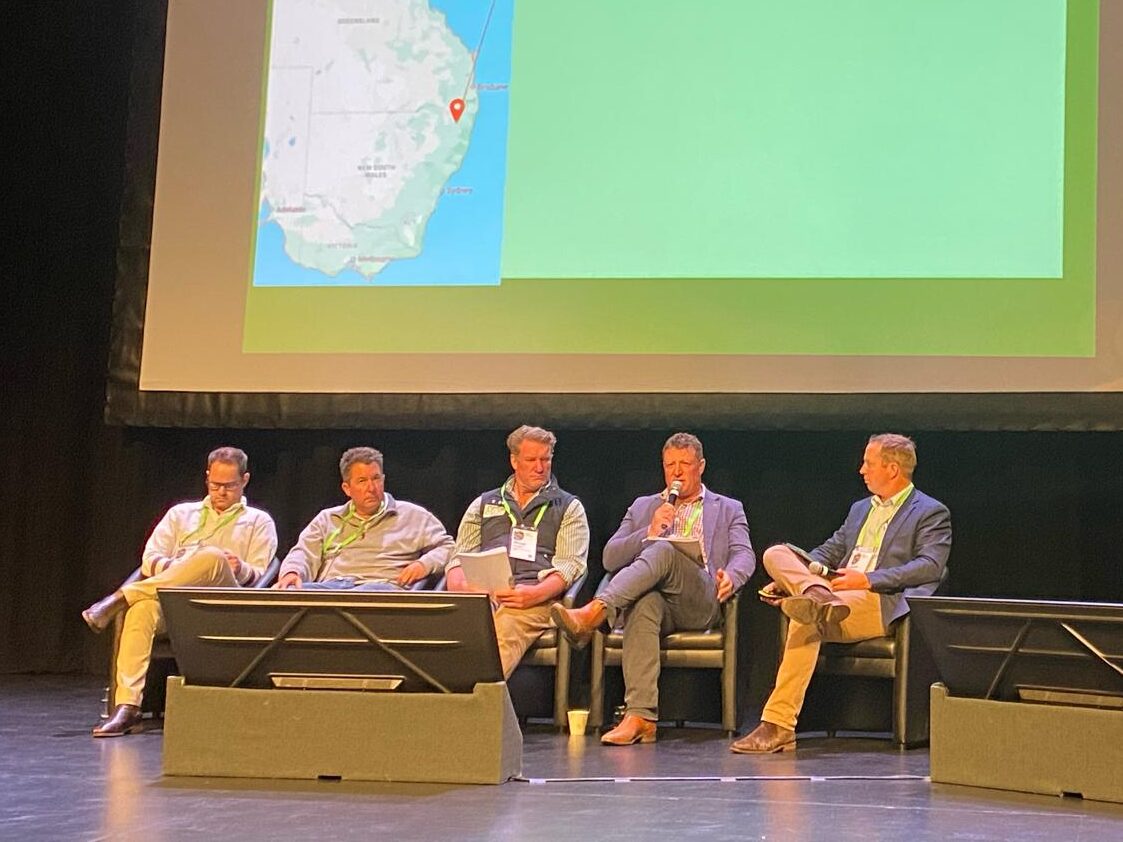
Posty presented our project as part of a Farmer panel at the National Carbon Farming Conference in Albury in early November.
Farewell Gemma
At the end of July we welcomed Gemma from New Zealand to Glenavon. She came to learn more about our program and the seedstock business. Her passion for agriculture was infectious especially the Angus breed and she quickly became an integral part of the team.
Experiencing all sides to our business from Bull Sale prep, calving in the stud, calf marking, joining programs both AI & ET, crutching lambs (something she openingly declared to love), feral pig management and getting to know our weeds.
We will truly miss her and wish her the best for the opportunities she will make for herself as she forges a career in agriculture.